
Checking Criminal History in Stanislaus County
Begin with the question the record must answer. The Superior Court case-search page is the starting point for filed charges and case status. The sheriff's current-custody roster answers whether someone is in a Stanislaus County jail now. A city police records unit holds its own incident reports, while the California Department of Justice gives a person access to their own state summary criminal history through fingerprints.
Use a full legal name and date of birth when the official form permits it. Keep a case number or seven-digit booking number close if one is known. Similar names can lead to the wrong person, and a booking charge can differ from what prosecutors later file.
- Decide whether the needed source is a court file, booking entry, police report, or personal state record.
- Search the matching official channel with the most exact identifier available.
- Compare dates, agency names, and case or booking numbers before treating a result as a match.
- Request the underlying document from the clerk or records unit when the screen lacks context.
- Use a certified court copy or DOJ fingerprint review when an official result is required.
Two Stanislaus Criminal Record Counters
Stanislaus County criminal records split between two main counters. The Superior Court Criminal Division at 800 11th Street, Room 140, Modesto, keeps case files, minute orders, dispositions, sentences, transcripts, and archive requests. The Sheriff's Records Division at 250 E. Hackett Road handles crime and incident reports, county-only arrest letters, warrants work, sealings, and law-enforcement database entries. Going to the wrong building can delay a simple request.
The offices also charge for different tasks. Court research costs $15 when the case number is unknown. Court copies are $0.50 per page, certification is $40 plus copy charges, and an electronic hearing recording costs $15. Sheriff incident reports cost $5 for the first four pages and $1 for each later page. A county-only Arrest Record Letter costs $25 and requires the subject to appear in person.
| Need | Official holder | Best first step |
|---|---|---|
| Filed charge or disposition | Superior Court Criminal Division | Use the case route or ask the clerk |
| Current custody or booking | Stanislaus County Sheriff | Search Who's in Jail |
| Police incident report | Reporting police agency | Contact its records unit |
| Own California rap sheet | California DOJ | Submit Live Scan fingerprints |
The court's official search landing page shows the entry point for portal access.
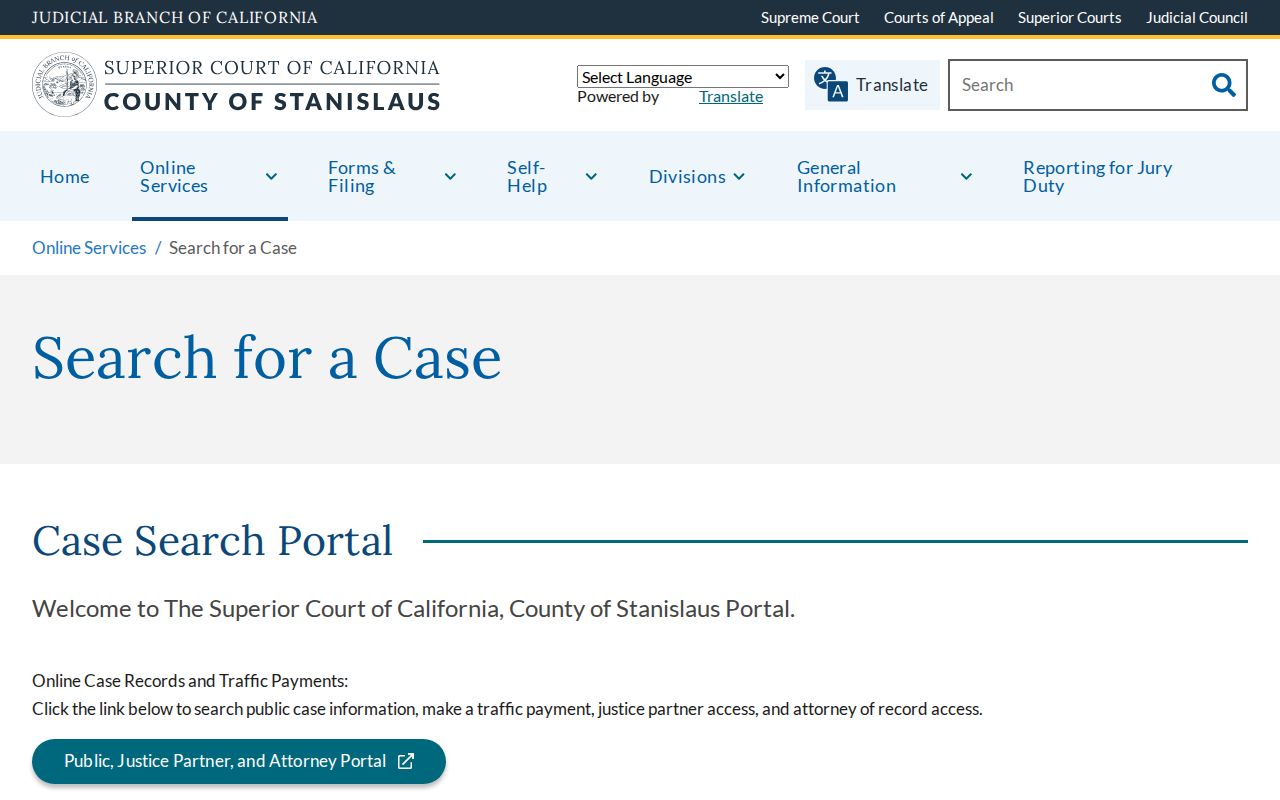
That page begins the court search, but the criminal clerk remains the fallback for files not exposed remotely.
California Official Background Checks
The California Department of Justice does not offer a public name-based portal for anyone to pull another person's statewide rap sheet. Its official public-facing process is a subject-only review. The person completes form BCIA 8016RR, takes it to a California Live Scan operator, and pays the $25 DOJ processing fee plus the operator's separate rolling fee. Fingerprints help distinguish people with similar names.
The California DOJ personal record-review instructions explain the form and fingerprint process.
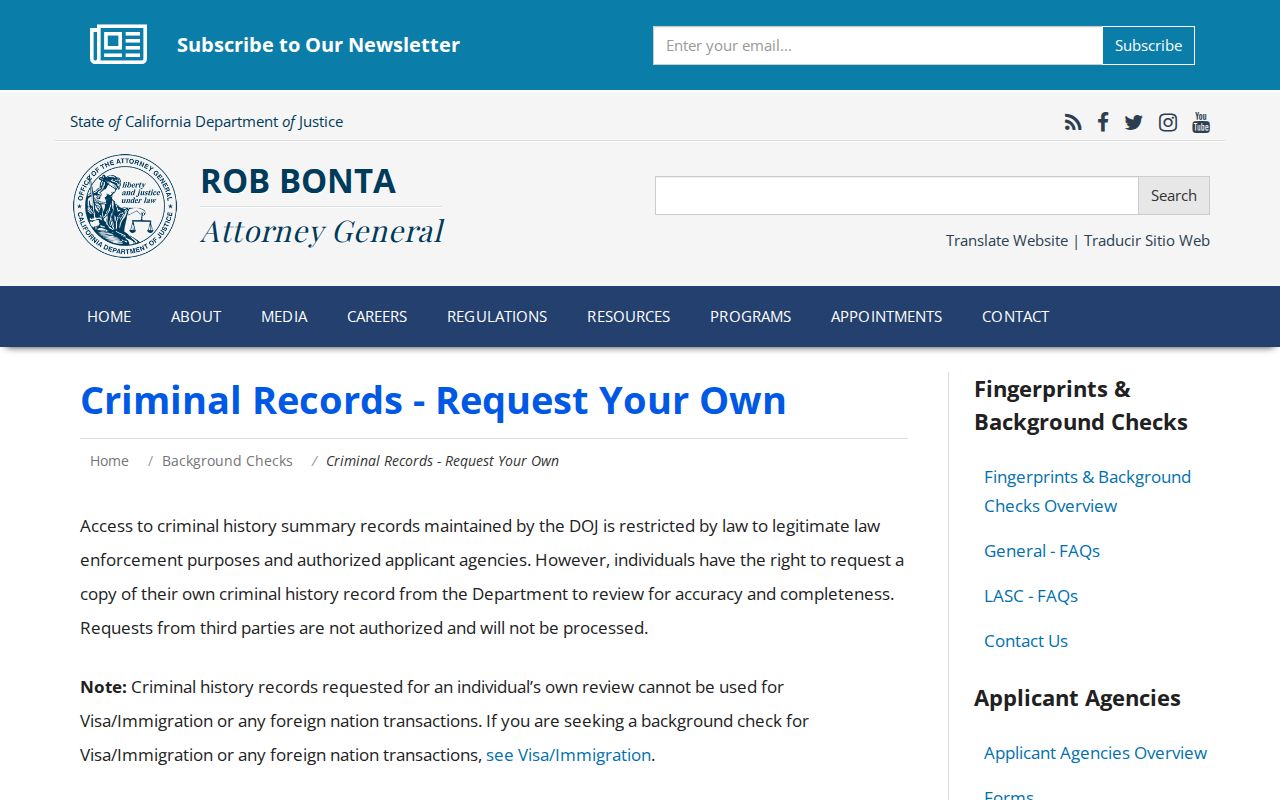
This official self-review can reveal whether state arrest and disposition reporting matches the Stanislaus County court outcome.
Official-use boundary: DOJ fingerprint checks required by law for a license or authorized role use the agency's approved Live Scan process. A public court or jail search is not a substitute.
Stanislaus Court Portal Limits
The Stanislaus Superior Court portal does not provide full remote criminal case detail to the general public. During research, its public notice said online public access was limited to civil information allowed by California Rules of Court rule 2.503. For criminal files, the practical fallback is the Criminal Division, a courthouse public terminal, a calendar, or a copy request.
A mailed search should identify the defendant's full name, any other names used, date of birth, approximate filing year, and offense type. Add the case number when possible. Older files stored off site can take six to eight weeks to retrieve, so archive requests need more lead time than current files.
The Stanislaus Superior Court portal displays the county's access gateway.
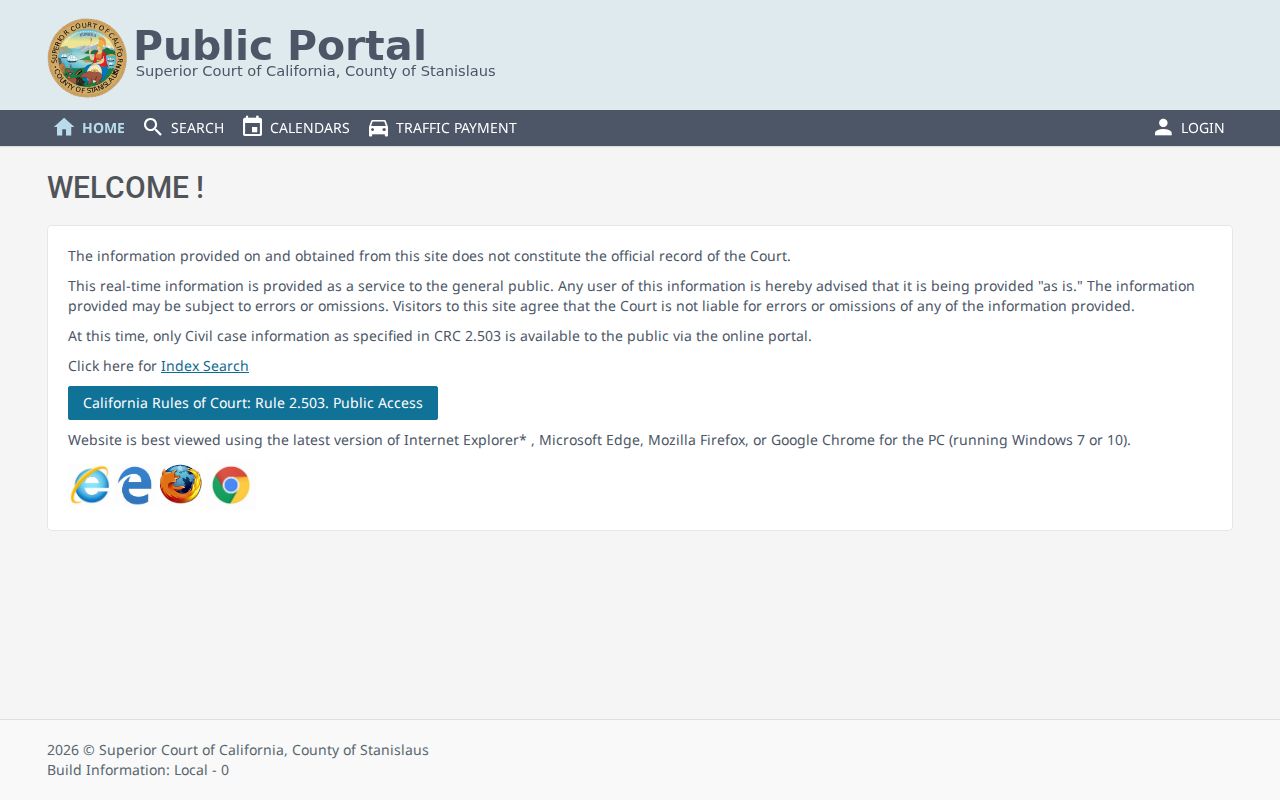
The portal is useful for routing, while the clerk supplies the deeper criminal record when remote public detail stops.
Criminal Record Types
A Stanislaus County criminal history is assembled from records created at different stages. An arresting officer writes a report. The sheriff creates a booking entry if the person enters county custody. The District Attorney chooses whether and what to file, and the Superior Court then records arraignment, motions, pleas, trial events, disposition, and sentence. California DOJ receives fingerprint and disposition reports for its state repository.
- Arrest and booking records: show custody events, the arresting agency, booking charges, bail, and release data.
- Criminal court files: show charges as filed, hearings, pleas, orders, outcomes, and sentences.
- Police reports: contain an agency narrative and details that may be redacted or withheld.
- Warrant records: link an order to a case and issuing court, but no official countywide online warrant list was confirmed.
- Custody and supervision records: separate county jail, probation, state prison, and parole status.
Each source answers a narrower question. A booking is not a conviction, and a state prison locator is not a county criminal case search.
Stanislaus Booking Data After Release
The sheriff's Who's in Jail tool searches current custody by name, date of birth, or seven-digit booking number. A result can list booking number, place of birth, arresting agency, facility, booking and release dates, charge, case number, bail, and court date. Those fields help locate a person and identify the right report desk.
Once a person leaves custody, a current roster may no longer answer the question. Move to the arresting agency for the police report and to the Superior Court for filed charges and disposition. The Stanislaus County arrest lookup explains the full chain without treating a booking accusation as proof of guilt.
Note: A charge shown at booking can change before filing, through plea talks, or at final judgment.
Inside a Stanislaus County Criminal Record
Read every field in context. Identity data links the record to a person. An arrest date marks a law-enforcement event, while a filing date marks the start of a court case. The statute and charge text can be amended. The disposition states how a count ended, and the sentence records the court's order after conviction or plea.
| Name and identifiers | Legal name, aliases, date of birth, and agency or custody numbers where public. |
|---|---|
| Arrest and booking | Arresting agency, booking number, facility, booking date, bail, and release date. |
| Charges and statutes | Alleged offense text and California code references at that stage. |
| Disposition | Dismissal, acquittal, conviction, plea, or another outcome for each count. |
| Sentence | Custody, fine, probation, or other orders entered by the court. |
| Supervision status | Probation or parole information when it is part of an accessible source. |
- Disposition
- The final outcome recorded for a charge.
- Wobbler
- A California offense that may be treated as a felony or misdemeanor under the governing law and court action.
- Minute order
- The court's record of what occurred and what was ordered at a hearing.
Stanislaus Charges Become Court Cases
An arrest does not automatically create the same court charge. The Stanislaus County District Attorney reviews law-enforcement submissions and prosecutes criminal cases filed in Superior Court. A report may contain several allegations, while the filed complaint may use different counts. Later amendments, plea terms, dismissal, acquittal, or sentence can change the legal result again.
The record flow is best read as: Arrest or Citation → Agency Report → DA Filing Decision → Superior Court Case → Disposition → DOJ Update. If a booking screen and court file conflict, compare dates and case numbers, then obtain the court's final order.
The Superior Court Criminal Division gives its mailing and clerk information.
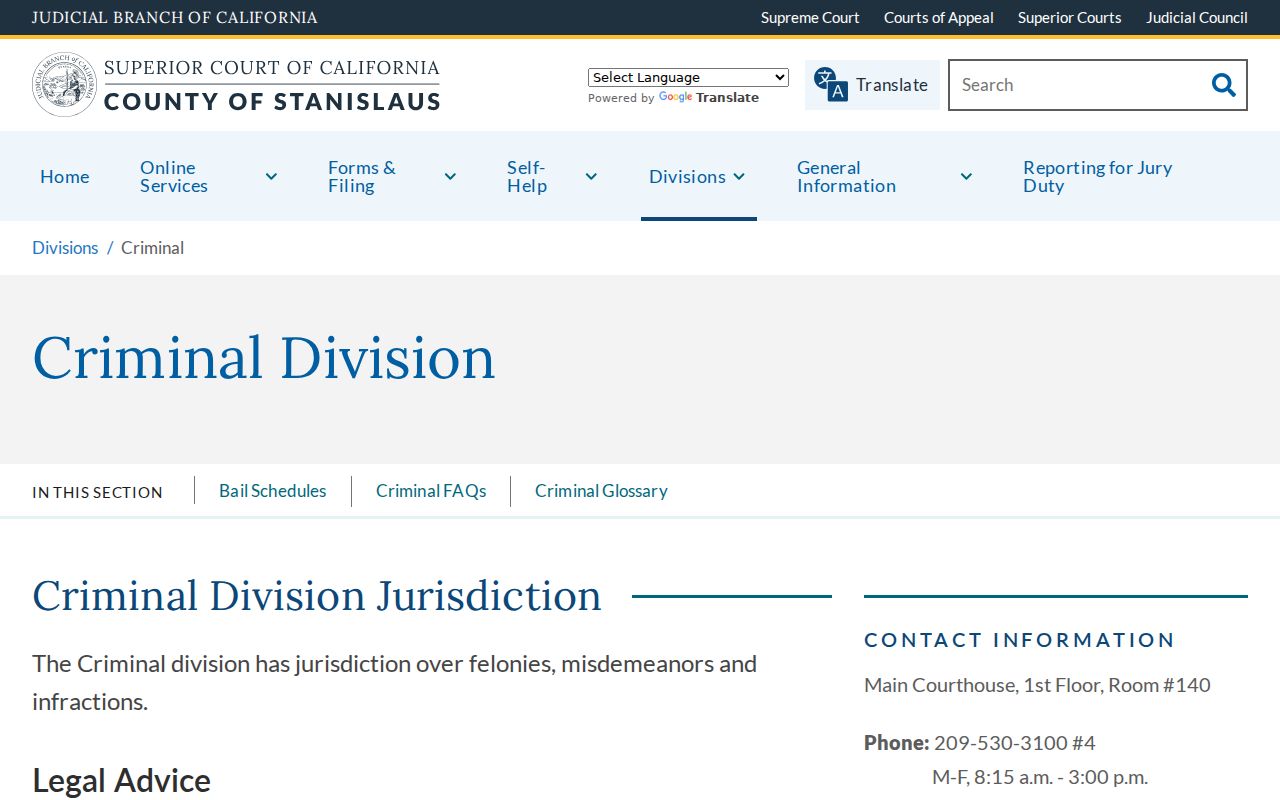
The Criminal Division is the source for the filed case record, not the sheriff's booking roster.
Public Access Laws in California
California law separates public agency records from protected criminal history. The California Public Records Act covers requests to executive and local agencies, but it does not erase exemptions for investigations, juveniles, victims, confidential material, or state summary criminal history. Court records follow judicial access rules rather than an ordinary city or sheriff CPRA request.
Stanislaus agencies may redact a releasable report or withhold protected parts. The Sheriff's report page says the agency makes a compliance determination within ten days, though review, approval, and juvenile procedures can extend the practical timeline.
Key California laws:
Government Code section 7920.000 opens the recodified California Public Records Act.
Penal Code section 11105 limits dissemination of state summary criminal history.
Penal Code section 13300 governs local summary criminal history.
Penal Code section 851.91 addresses sealing eligible arrest records.
Stanislaus Warrants Need a Fallback
No official online active-warrant portal for all of Stanislaus County was confirmed. A bench warrant tied to a missed criminal court date should be checked through the Superior Court case and Criminal Division. The Sheriff's Records Division performs warrant and due-diligence work, so Records at (209) 525-7117 or Sheriff's assistance at (209) 552-2468 is another official path. A probation-related issue may also require Adult Probation at (209) 567-4120.
Do not pay based on an unsolicited call. The sheriff warns that law enforcement will not demand payment by phone. Call the published office number, confirm the case or warrant with the issuing office, and ask the court about the proper calendar or recall procedure. Written proof matters after resolution.
Sealed, Expunged, and Restricted Records
California record relief includes more than one process. Penal Code section 1203.4 permits a dismissal in eligible probation cases. Penal Code section 17(b) may reduce an eligible felony to a misdemeanor. Other routes include Proposition 47 and Proposition 64 relief, adult arrest sealing, factual-innocence sealing, certificates of rehabilitation, pardons, and correction of a DOJ record.
The Stanislaus County Public Defender's Clean Slate Program helps county residents identify possible forms of relief and accepts applications through its stated return channels. Relief does not mean every agency record vanishes. A person should compare the court order with a later DOJ record review and use the DOJ correction process when the state entry is wrong or lacks the final disposition.
Juvenile files and reports have separate limits. The sheriff may require a petition to the Juvenile Court Referee before releasing juvenile-related information.
Stanislaus Probation and State Parole
Probation in Stanislaus County is a county function, while parole is run by the California Department of Corrections and Rehabilitation. The Adult Probation Division is at 801 11th Street in Modesto. Its detailed supervision files are not a broad public search, though a public court file may show the sentence and probation terms when access is allowed.
CDCR's Division of Adult Parole Operations handles state parole. For people in state custody, California Incarcerated Records and Information Search can show selected details such as a CDCR number, age, current location, commitment counties, admission date, and parole hearing dates or outcomes.
The official CIRIS search is the state custody layer.
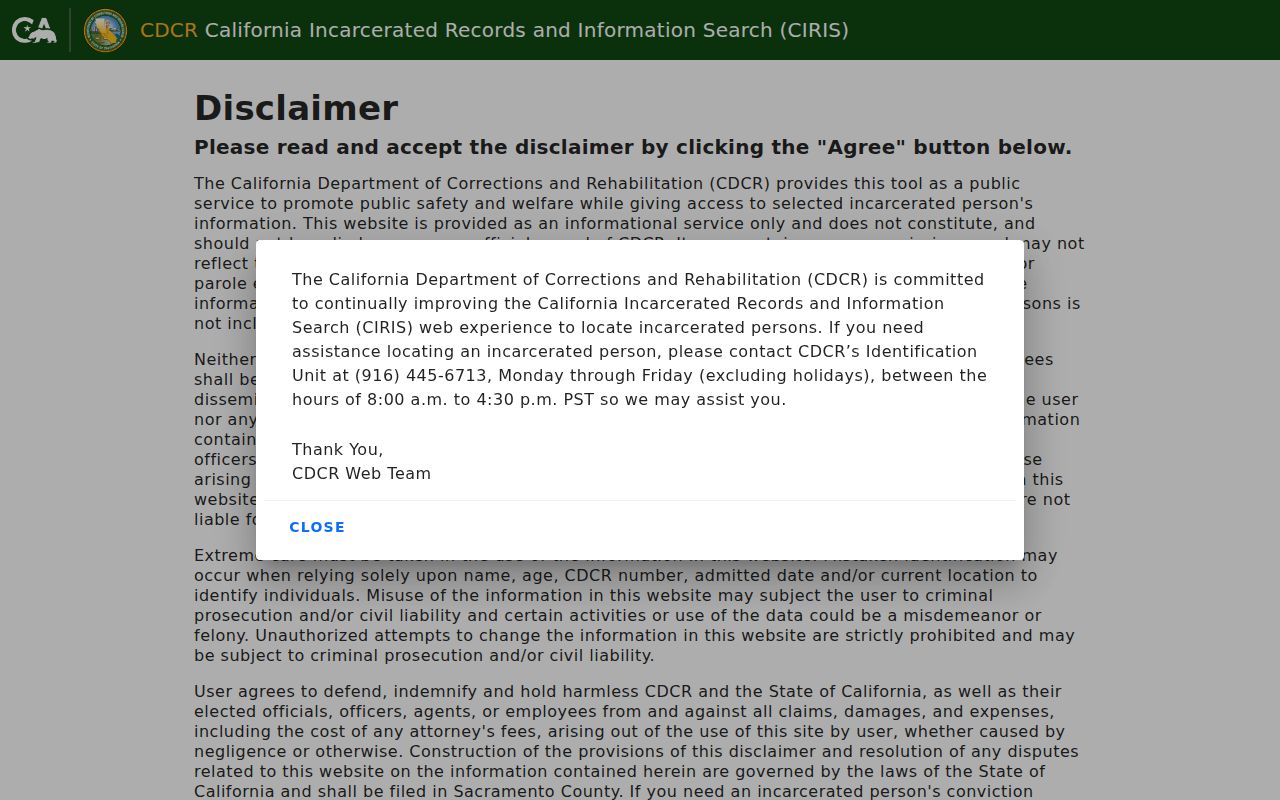
CIRIS should not be read as a Stanislaus County jail roster or local probation search.
The Stanislaus County Probation Department directory lists its adult, juvenile, and day reporting locations.
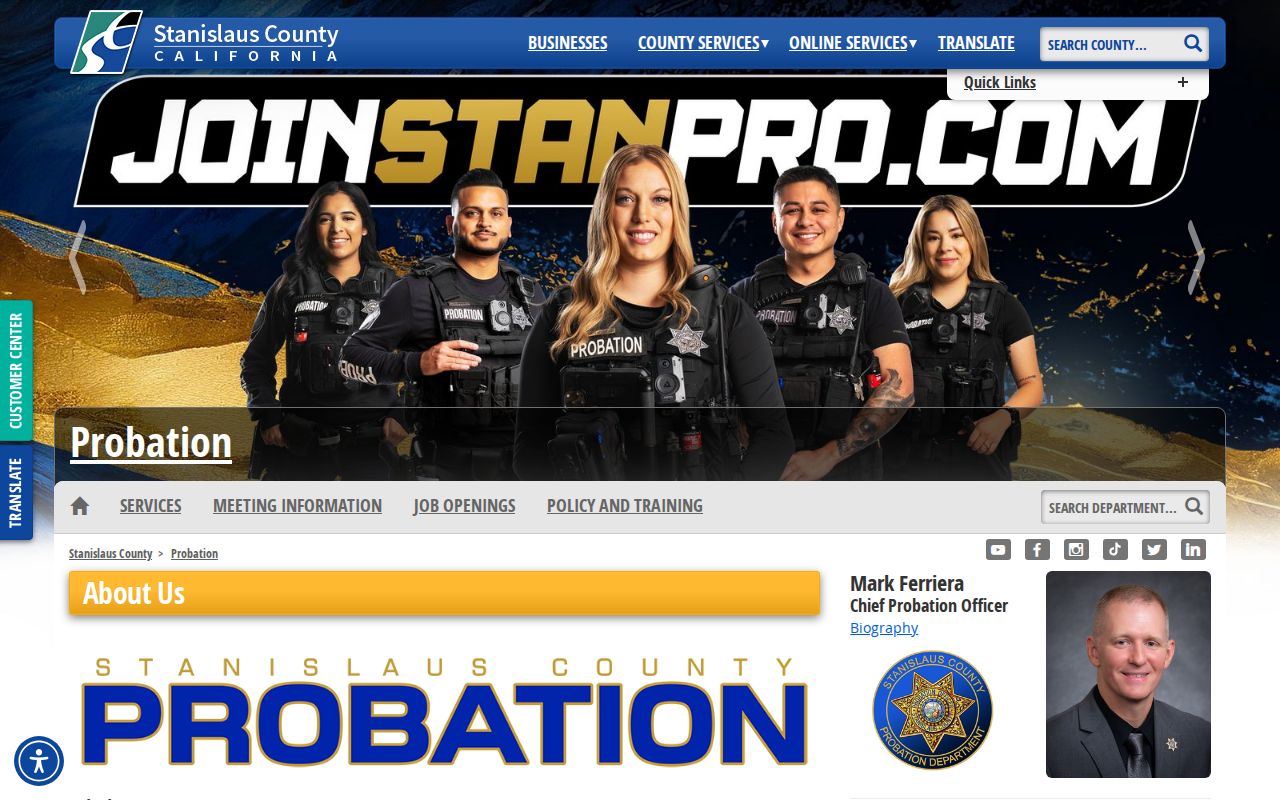
The county directory points to local supervision offices, keeping probation distinct from CDCR parole and prison custody.
Stanislaus County Criminal Records by City
Modesto, Turlock, and Ceres each maintain police report channels, while booked custody and filed criminal cases move to county systems. Modesto sends police records away from its citywide NextRequest portal and directly to Police Records. Turlock provides a detailed police request form with identity upload and delivery choices. Ceres publishes weekly arrest logs and requires in-person pickup for police reports.
Modesto Criminal Records
County seat with Police Records at 600 Tenth Street and county court access nearby.
Turlock Criminal Records
Police report requests use the Records Unit or its detailed online form.
Ceres Criminal Records
Police Records provides report copies and access to older arrest logs.
Stanislaus Megan's Law Boundaries
The California Megan's Law Website draws from the California Sex and Arson Registry. It allows public searches for specified registrants, but not every person required to register appears publicly. A profile may include name, aliases, photograph, physical description, marks or tattoos, qualifying offenses, county or ZIP information, and registration status when disclosure is allowed.
The California Megan's Law search entry presents the required disclaimer.
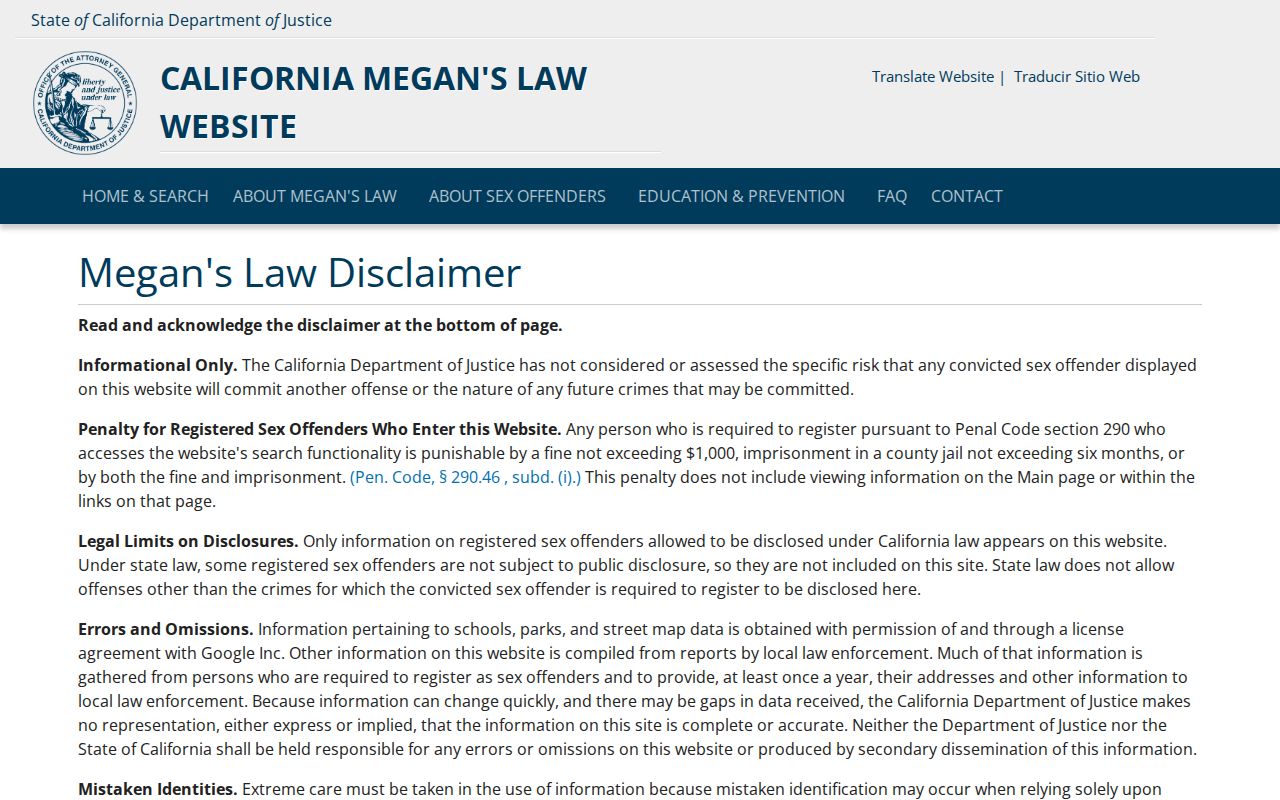
The disclaimer matters because name-only matches can be wrong and California limits both disclosure and use of registry data.
Registry information is for public safety. Penal Code section 290.46 creates criminal and civil consequences for misuse, including harassment. The Stanislaus Sheriff's Special Victims Unit answers local registration and notification questions at (209) 525-7074, while DOJ handles the public registry and correction concerns.